Titanium needs the light source to have a path that reflects directly to the viewer’s eye or camera. This causes shadows or keystone effects. I could use a script to un-keystone, but that has other issues. I’m starting to wonder if I could put a circle light directly around the camera lens so I have as close as possible to reflection right back to the lens without shadows.
Your “practice and experiment and throw away a lot” messages is great advice! With the advent of digital cameras, throwing away is a lot cheaper than it was when I got my first SLR (Canon AE-1),
Was the birch veneer finished at all when you engraved it?
Finished with gloss clear. I normally spray all of my pieces, one coat of sealer and one coat of finish lacquer. Recently i have been buying pre-finished maple.
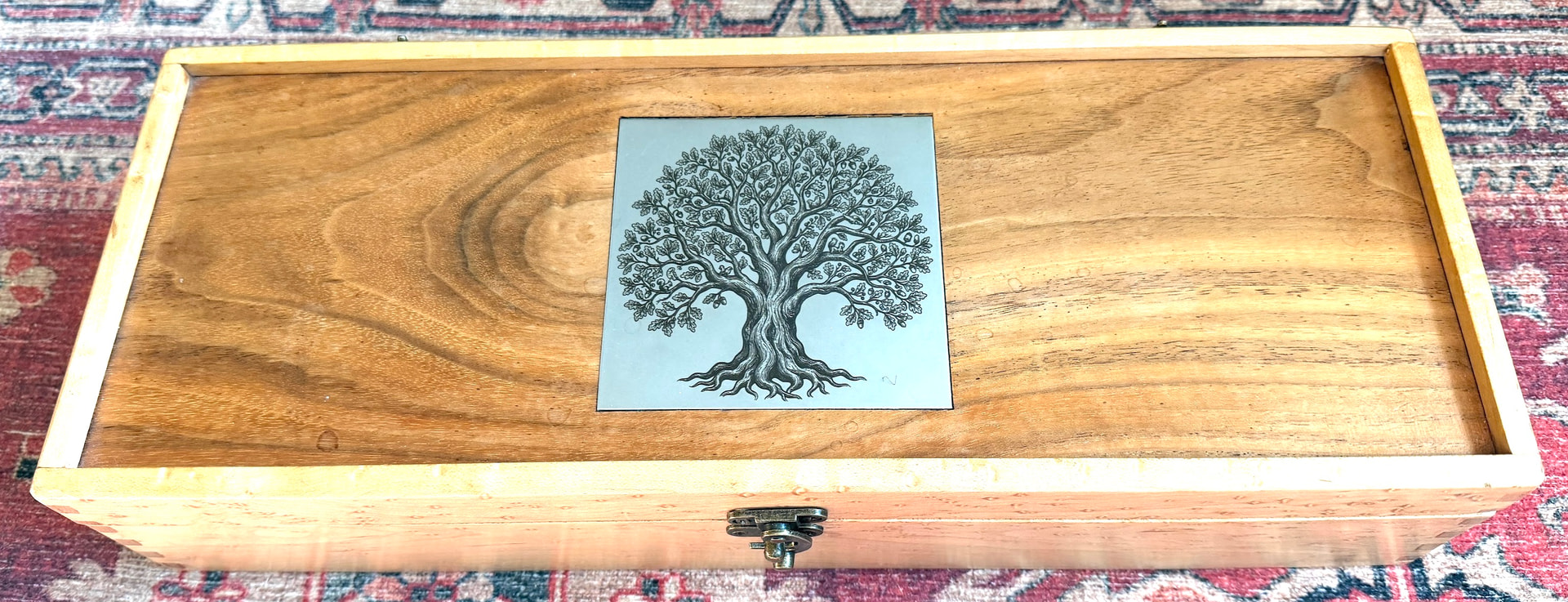
I’m also a woodworker and intend to engrave furniture and boxes I made and continue to make so it’s very helpful to learn about what you do to produce your amazing work. Theoretically, I can set the xTool F1 right on an already built table or box, but so far I’ve been too worried about not getting the settings right. But I should just get over it and take the plunge (after practicing on as similar piece of scrap as possible, of course). Worst case, I can always sand of the engraving and try again (practice a lot and throw away a lot :-). It’s interesting that you seal before engraving, and that’s good news for furniture I built and finished decades ago. Here’s a photo of a box in which I embedded a stainless engraving.
Do you finish before engraving to help prevent smoke discoloration? Do you seal again after engraving? Thanks!
Good to know that etching through finish is an accepted practice. I wonder what burning through 1/8" of cured resin would smell like if it escapes ventilation. I use shellac and oil-based poly on most of my wooden creations.
It smelled like cured resin. The trick was to not blister the resin from the trapped heat. My customer gave me a rejected piece of her work to practice on. I was working with a 40w diode laser.
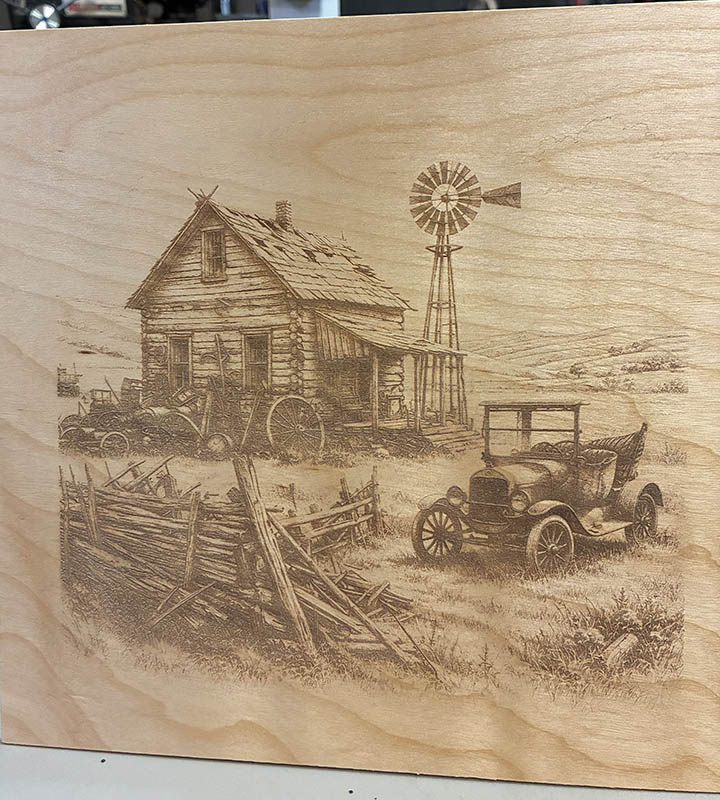
I seal and sand smooth, clean with a dust cleaning cloth, spray a coat of gloss or semi-gloss finish lacquer. I then do my engrave and clean the entire piece with LA’S TOTALY AWESOME. It removes all residue and smell. Use a good grade paper towel and be careful to not rub residue from towel back onto piece. Follow cleaning with a dry clean towel to remove any of the solution off the piece. I also cut all of my pieces to size so there are no burned edges. I do nothing more to the finish, not necessary
Thank you for the caution about fumes! I got a stern lecture from Gemini about ventilating everything and actually decided to wait until I could acquire and install a fan to vent out a basement window before I started using the laser. The metal and oxide don’t make any fumes I can smell, but burning the 1mm deep pocket in the walnut top on the box sure did, and it took hours to burn that deep with my not-so-powerful laser 10w laser.
Fortunately, I don’t have anything with resin on it. Just shellac and poly, and those are very thin layers. I sand thoroughly to get the wood smooth so the finish doesn’t have to have any thickness.
I am sorry. I have decided to keep my current method to myself for awhile anyway. Interested to see how many folks are driven as much as I, to get this far with a single purpose in mind.