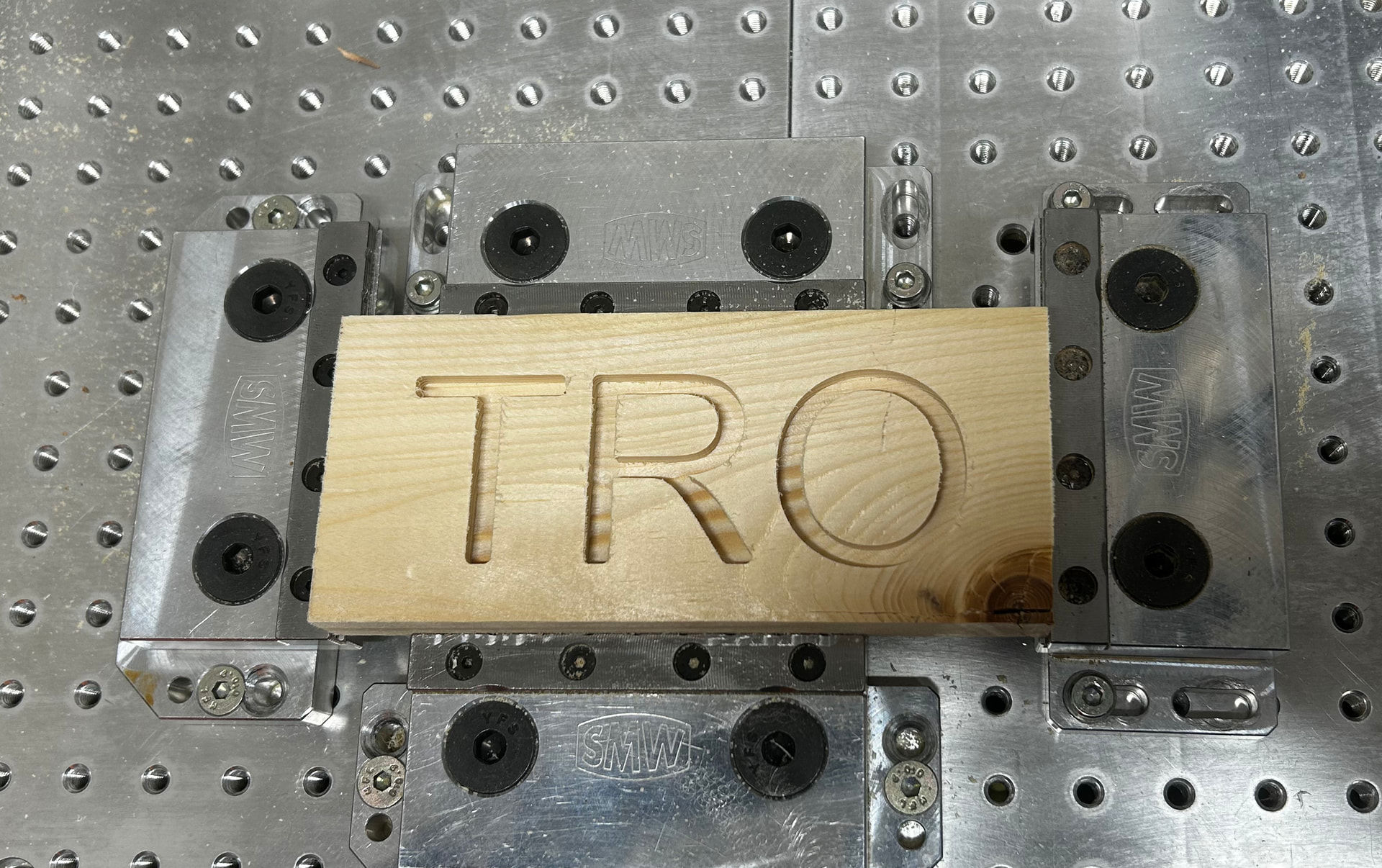
My old series 3 Shapeoko CNC machine (400 x 400mm) has been substantially upgraded. Straight paths for the belt drives, 2.2kW spindle, sea of 840 x M6 holes in an SMW aluminium baseboard with under baseboard stiffening rails along with SMW modular vices. And for the last few years I have used Carveco Plus for all of my CNC machining including 3D relief work. Recently, I was considering getting a new CNC machine because I wanted to use more facilities like 4th axis and automatic tool changing. Something has caused me to hold off buying another machine just yet and that is the outstanding MillMage software.
The ease with which ramping and trochoidal milling can be assigned to a toolpath has been an absolute pleasure to use. It is for this reason that I can still use my machine to undertake tasks which can easily save on the expense of tooling. The trochoidal toolpath reduces tool engagement and cuts more efficiently, while keeping cutters cool and helping them to stay sharp longer. Dry cutting of soft metals like aluminium and brass is a revelation. Aluminium specific cutters no longer get hot or gummed up and they stay sharp for much longer. Ramping is another feature that helps the cutter by using a reduced stress profile. Material removal rates are much better too.
Thank you for this great software. It should help provide improved facility accessibility to those who wish it and never had it available to them previously.