I am looking to making a diy laser bed with perforated sheet metal. I was wondering if anyone can help me figure out what the size holes should be and if it drops down causing the bed to not be flat.
Hi.
That depends.
The holes have to be as large as possible to minimize flashback and to help with smoke extraction, and small enough that the smallest items You need to cut at one go (without using tabs) won’t tilt or fall through while cutting.
Hole/solid ratio plays an important role as well.
Any perforated laser bed will droop -or bulge if the energy is high enough to expand the metal- sooner or later and regardless of the design, so You need to have supports beneath it.
While possible, there’s too many unknowns to calculate how much support one needs for given materials and dimensions, but fortunately very easy to test  .
.
Regards,
Sam

Thank you so much for the response. The dimensions of the bed is incredibly huge. About 54in x 53in.
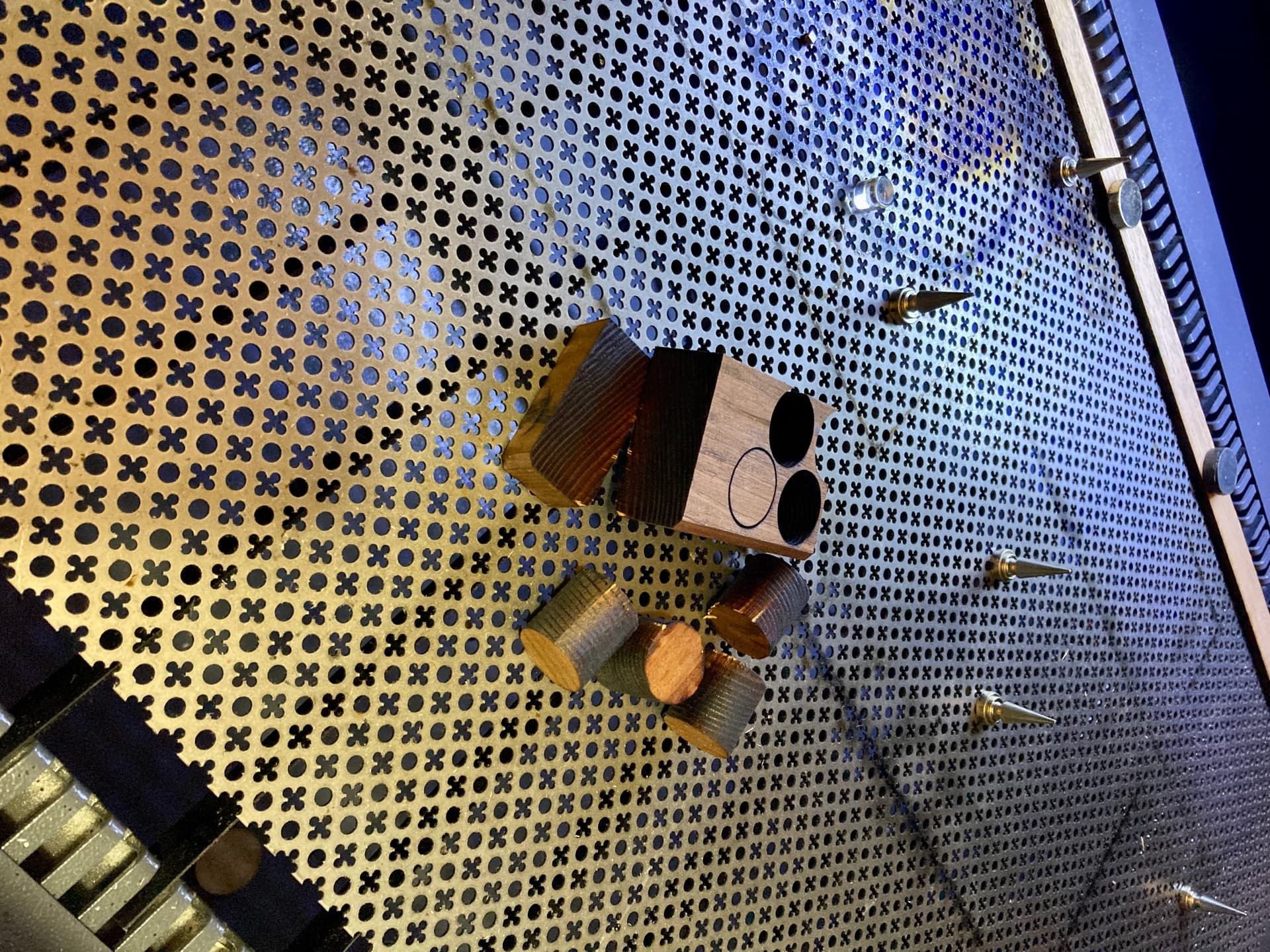
Different perforated sheets are available, if there are knives already, I would choose the one from picture no. 1. It has many holes but is still very stable and nicely flat.
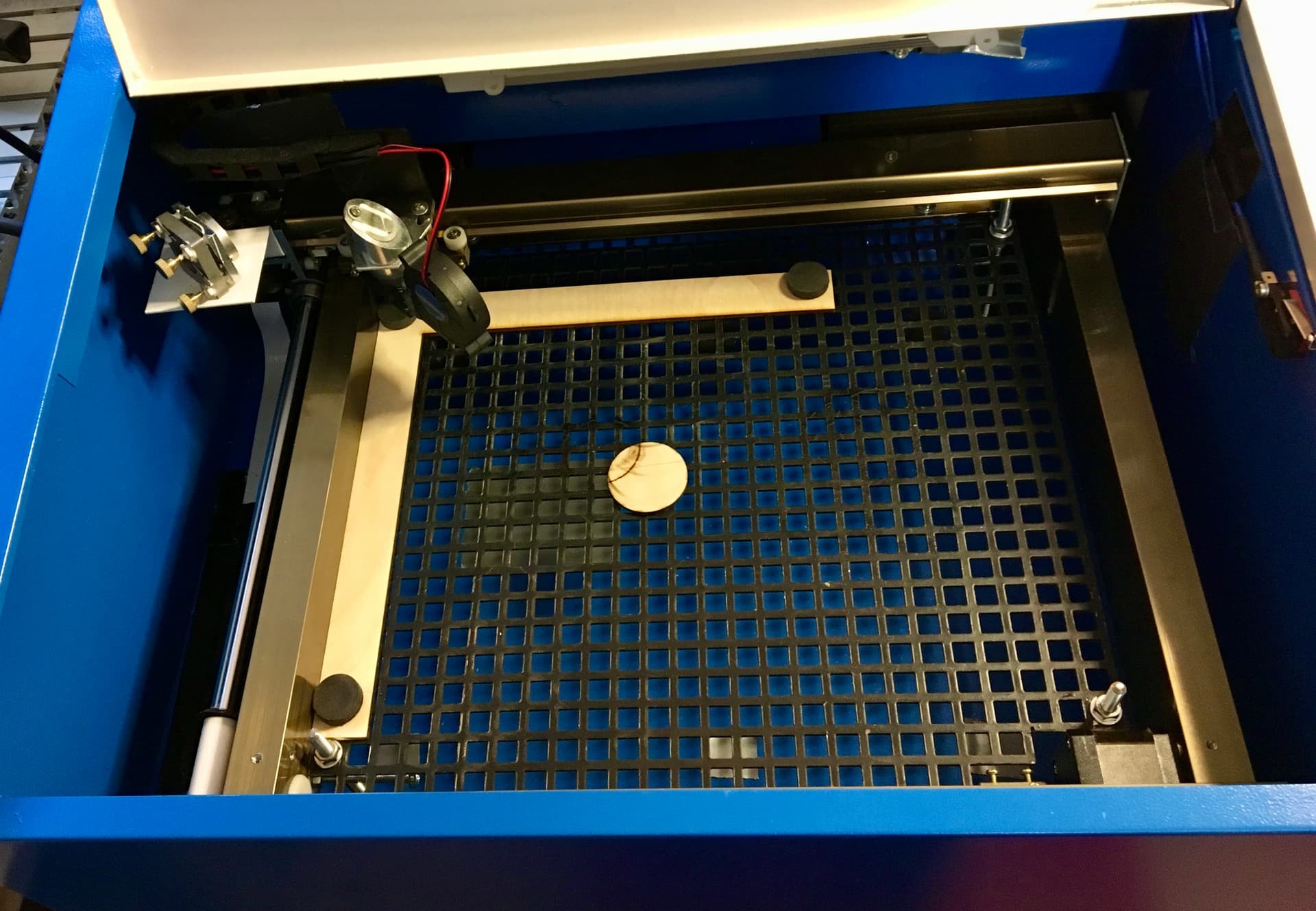
On my K40 I used the type from picture no. 2, it also worked fine.
I would go for 1.5-2mm+ thickness, even though or because it is relatively heavy, I have not had problems with flatness. Furthermore, there are very nice options for clamping the sheet firmly and fine-tuning the height in the different regions so that it is flat all over.
The sheets are available (here) in 2000x1000mm and can be adjusted with an angle grinder or enlarged by welding.
Avoid galvanized steel sheets, black steel is fine for the task.
Hi Bernd I actually saw your post you had on another person who had a question on diy laser beds and you inspired me to go with perforated sheets. Thank you so much for your input.
Hi.
You’re welcome @DinDin .
While larger than an average hobby laser, I’d say that it’s closer to a mid-size one.
For a gantry mounted diode anyway, stationary fiber ones and CO2’s are a bit different animals for various reasons.
The reasonable bed size helps to keep the cost and weight down, so it’s definitely not a bad thing.
With a thick sheet You may get away with a simple cross grid, a thinner one may require a 3x3 grid (Tic-Tac-Toe grid).
I would include a some sort of fine tuning capability to the grid design, helps getting and keeping the bed as flat as possible.
If You can find such a sheet easily, I do second the “middle eastern” pattern design @bernd.dk suggested.
Regards,
Sam