Hey!
I’m wondering what color those rocks are inside. So if they were broken would the inside show roughly the same color as the engraving…but without the second pass to add more power.
Are the outsides greyblack from oxidation?
Was just looking at the ‘Conservation’ rock and thought the engrave reveals the same color as the speckles…So maybe the speckles just dont oxidise like the other particles.
All I can say is get a big hammer and do some rock surgery. 
1 Like
Well, that’s a logical question, and I just happen to have both a bunch of rocks and, in my trail maintenance and building kit, some heavy tools. Sounds like a good enough reason to ask Beverly to investigate.
(I have two axe-handled heavy tools. The one I use more often, mostly to hack out extra large invasive Chinese privet, is my pulaski. Obviously, then, if the axey-adze is Pulaski, the 10-pound sledge, which is a rather adept crusher, must be Beverly.)
On the left are Home Depot Mexican beach pebbles, and on the right are Lowe’s Bali Black beach pebbles. The former are basically the same inside as out, it appears, and the latter are much darker on the outside due to the polishing.
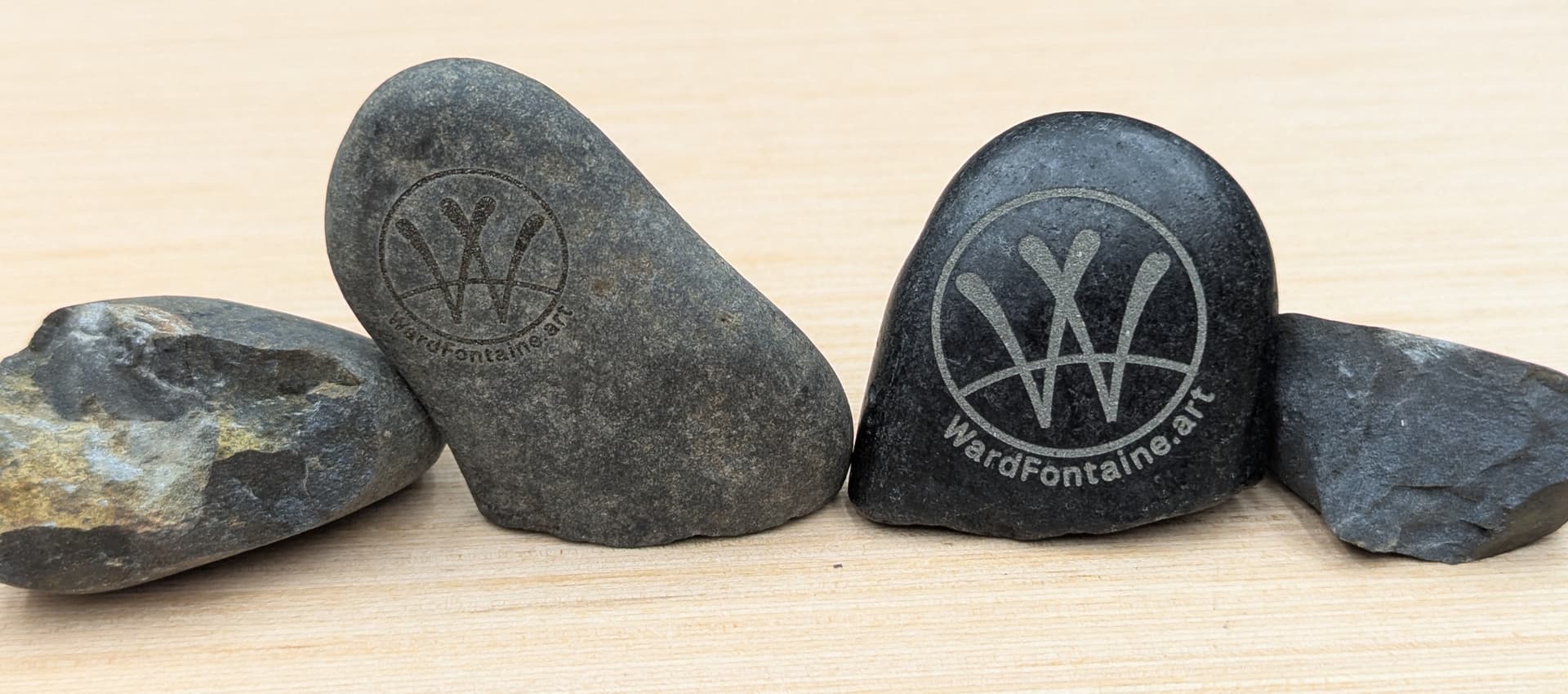
Incidentally, if you don’t happen to know about Ed Pulaski, the ranger for whom the Pulaski is named, he’s a notable person, much more so than the TNG doctor, although I’ll go long distances for puns and wordplay.
2 Likes
The rock on the left appears geologic. The one on the right appears volcanic.
Interesting conversation direction change, from burning rocks to smashing them.
Back to burning… I bought some brick verneer. I thought it strange the ad said “flexible”. Turns out it is clay, which I think is pre-kiln brick. Lasered contrast was not all that good. And I do not have a kiln to take them to the next step. Planning to visit a pottery shop with the other 98 pieces.
1 Like
Thank’s for the pic of the rock Nathaniel ;Beverly! I had recalled hitting rock with a hammer and getting brighter color dust, but couldn’t figure out why.
MikeyH’s explanation of volcanic & geologic also explains pure and mixed.rock ingredients
I was interested in the ‘Electric universe’ a few years ago, which talked about ‘Berkland currents’ (Dark plasm connectors) between sun and astral bodies…like a circuit board and catastrophic events that that led to these currents machining/burning the likes of Grand canyon & Vallis maranaris on mars. they show same atrifact evidence as seen in plasma cutting.
Also these events are said to be responsible for the ‘Rocky mountains’ by comparative basistic studies with such as verticle rock/coal seams and balistic shockwaves and blow off tops along the whole range as well as other anomalies, Wind blown tuff caused by planetery super storms driving molten and rock debris.
You’d need a bit more than protective eyeware to watch that.
The
1 Like
I remember the PET rock very well.
1 Like
It’s all your fault! I’ve now got another learning curve to master.
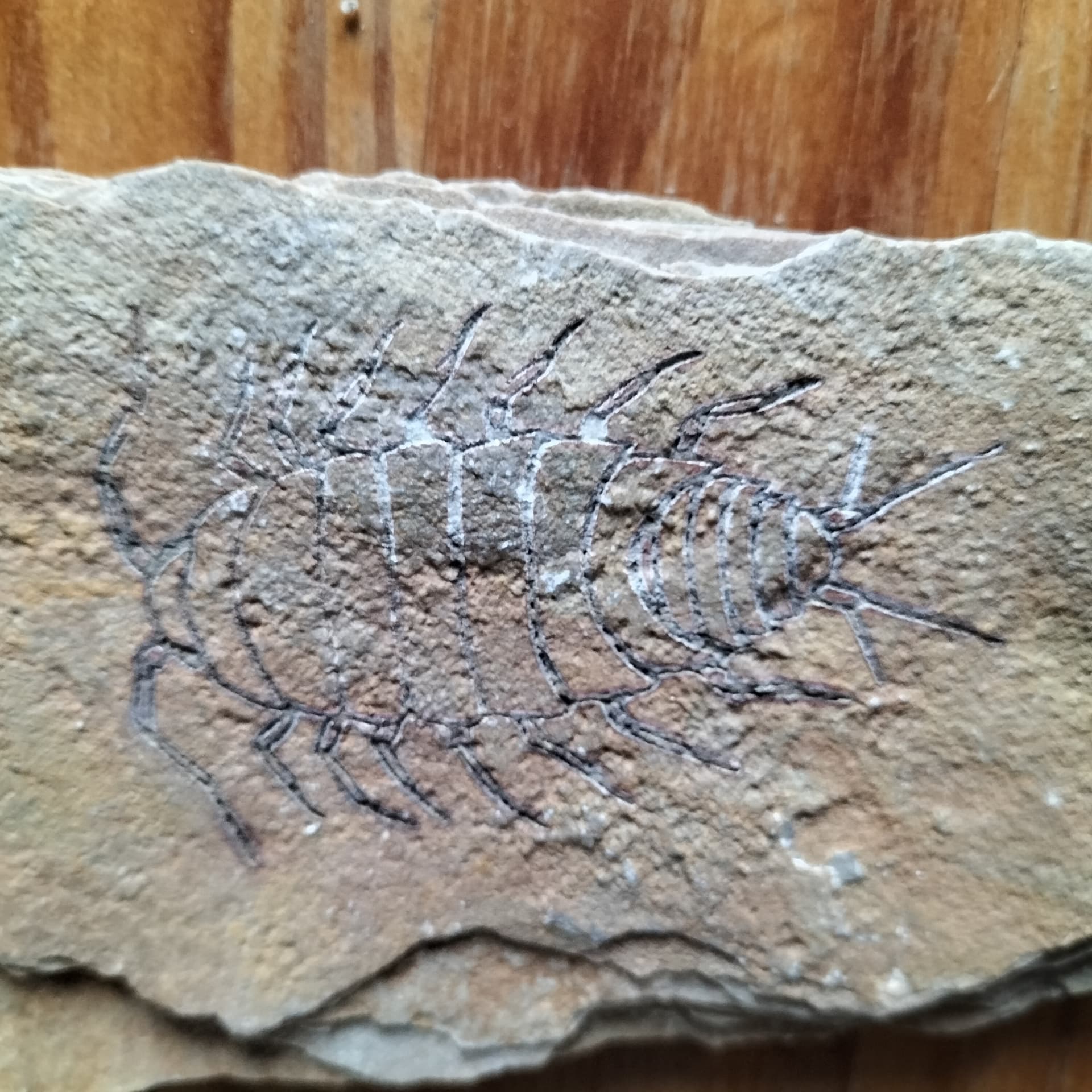
A first attempt. 500mm/min at 90% 1 pass with a 20W led laser. The stone is sedimentary rock, sand based and quite soft. Looks like a fossil. More practice tomorrow. I think a slower pass and more of them.
6 Likes
Hahaha! Glad to see “First Try” turned out so well. I think that happens to suck us in. But it is fun pioneering a new path for lasers, no?
Thanks. This stone is used for paving here so there is a ready supply. It’s a pity that IR lasers are so expensive here. I don’t want a divorce. Lasers are great fun. It’s a pity I left it so late in life but it certainly keeps the space between the ears exercised.
I am a widower of 10 years and t I cannot justify those IR modules either. Hopefully they will make too many and the price will come down.
What amazes me is all the different materials being used with lasers, and the quality of product people are cranking out. I have scheduled some Craft Markets, and doing something like that was never on my radar. And I am not the artistic type!
1 Like
I think we’re crashing a thread here. I’m not artistic either, I usually take some ideas and modify them. My motto should be “why didn’t I think of that”!
1 Like
Great work Brian.
What dimensions is that piece? and
What difference would the IR module make?
Good luck with the markets Mikey. was helping out a blacksmith buddy of mine and chatting about markets and he recons the small and quick stuff does best, most of the time.
1 Like
Thanks. The engraving was approx 10x5 cm.
The IR laser would not have made any difference in this case, though I stand to be corrected. I’d like to mess around engraving metals and acrylics.
I had the same idea for the IR so I got one along with the 20w. The IR may work for small pendant type pieces.
Did the 10x5cm take much time?
An IR is very much on hold for me unfortunately. The burn took about 40 minutes but it was at 254 lpi. Next time I’ll try it at a lower lpi.
I live off grid, bad weather today so no burning. I don’t have sufficient battery capacity and don’t like using electronic things because of the possible spikes from the generator.
1 Like
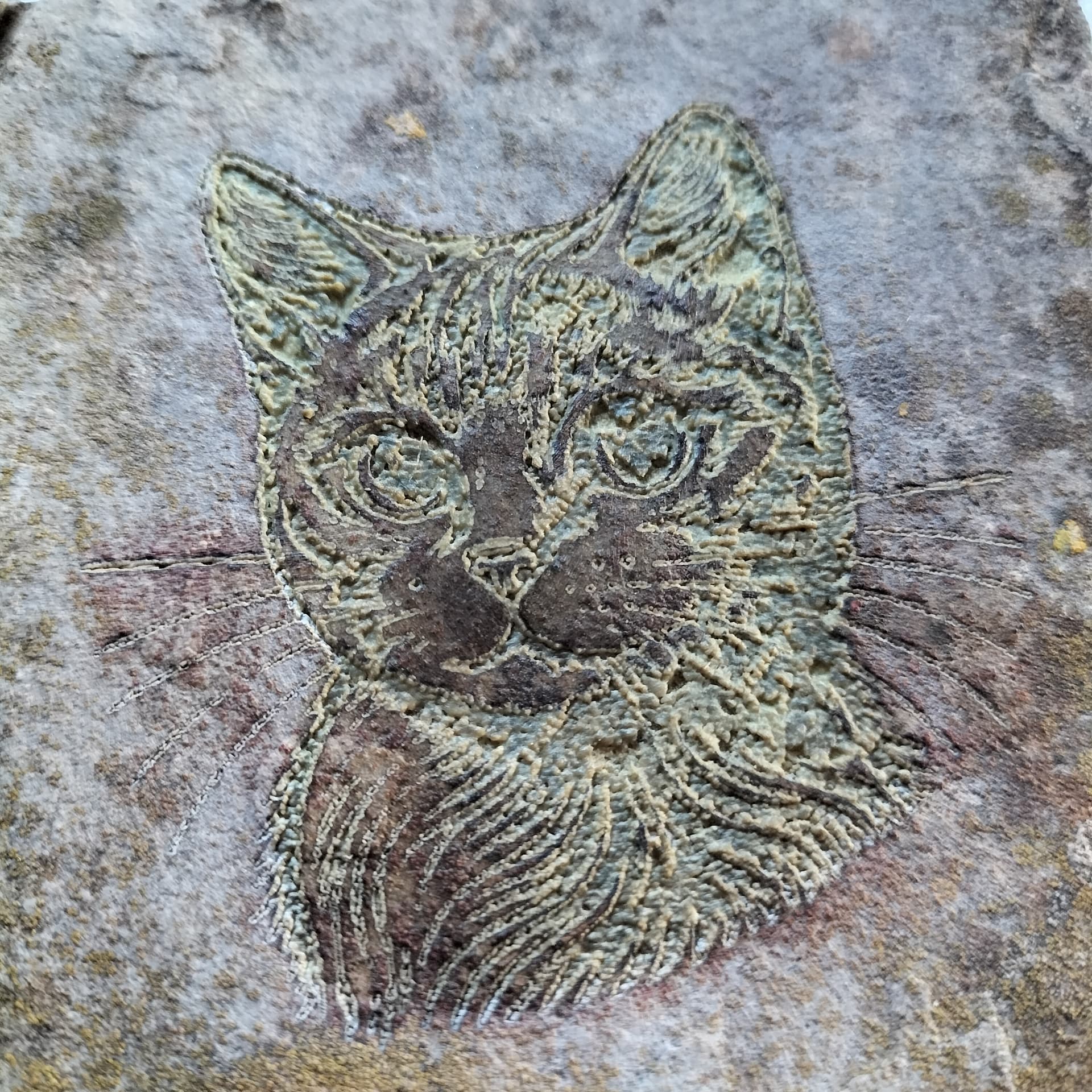
Second try! Two passes, the first at 500mm/min 95%, second pass 500 100% both at 254dpi. Finished off with a coat of artists acrylic matt varnish. Quite pleased really! Approx 8cm square.
2 Likes
At 3"square, that has to be pretty impressive! Thank you for contributing to this new class of laser projects.
As soon as I get back home, I need to work up some stuff for the craft fair.
1 Like
That definitely has good qualities to it including a sort of threeD quality.
Did the change from lpi to dpi & number of passes make a difference to the process?
Well done brian.
LPI and DPI are the same thing, said a different way. It is Line Interval that is the other metric.
I am sure the second pass made a difference. Pretty sure most of the projects done here were single pass.
1 Like
Just to clarify “LPI” stands for Lines Per Inch and “DPI” stands for Dots Per Inch.
About this matter what I know is LPI/DPI is kind of “limited” to the thickness of the laser beam. The higher the value (theoretically most definition) the higher the possibility of the laser beam pass thru the previous line. Resulting not in one pass but in one pass and a half if, for example, the line pass thru half the previous line.
There are various videos about the matter. This is one of them: https://youtu.be/jmf2611_76U?feature=shared
2 Likes