As in an earlier post the conclusion was that a thinner coat may be better, I was looking to spray on alternative. I had an opportunity to borrow a airbrush this weekend. I am looking for a a thin coat, but still very even over the tile.
I thinned the RonClarke recipe a bit and sprayed it on a 15cm x 15cm tile. I created a mesh pattern on a tile, to check the coverge. I also used some green food colouring in the paint to get an idea where I’d sprayed (Thank you for the tip @jkwilborn!). The fist photo is after lasering before removing the paint:
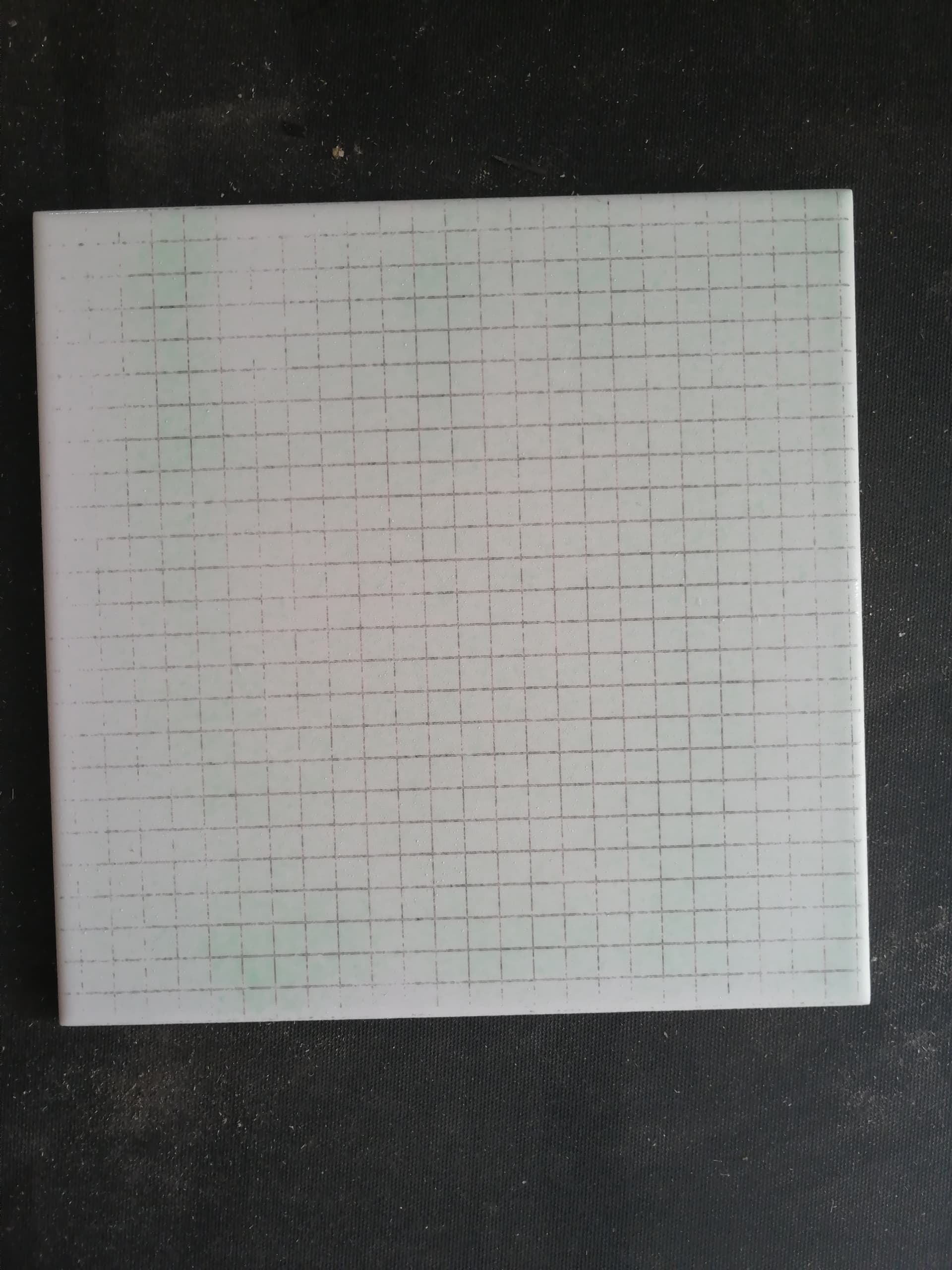
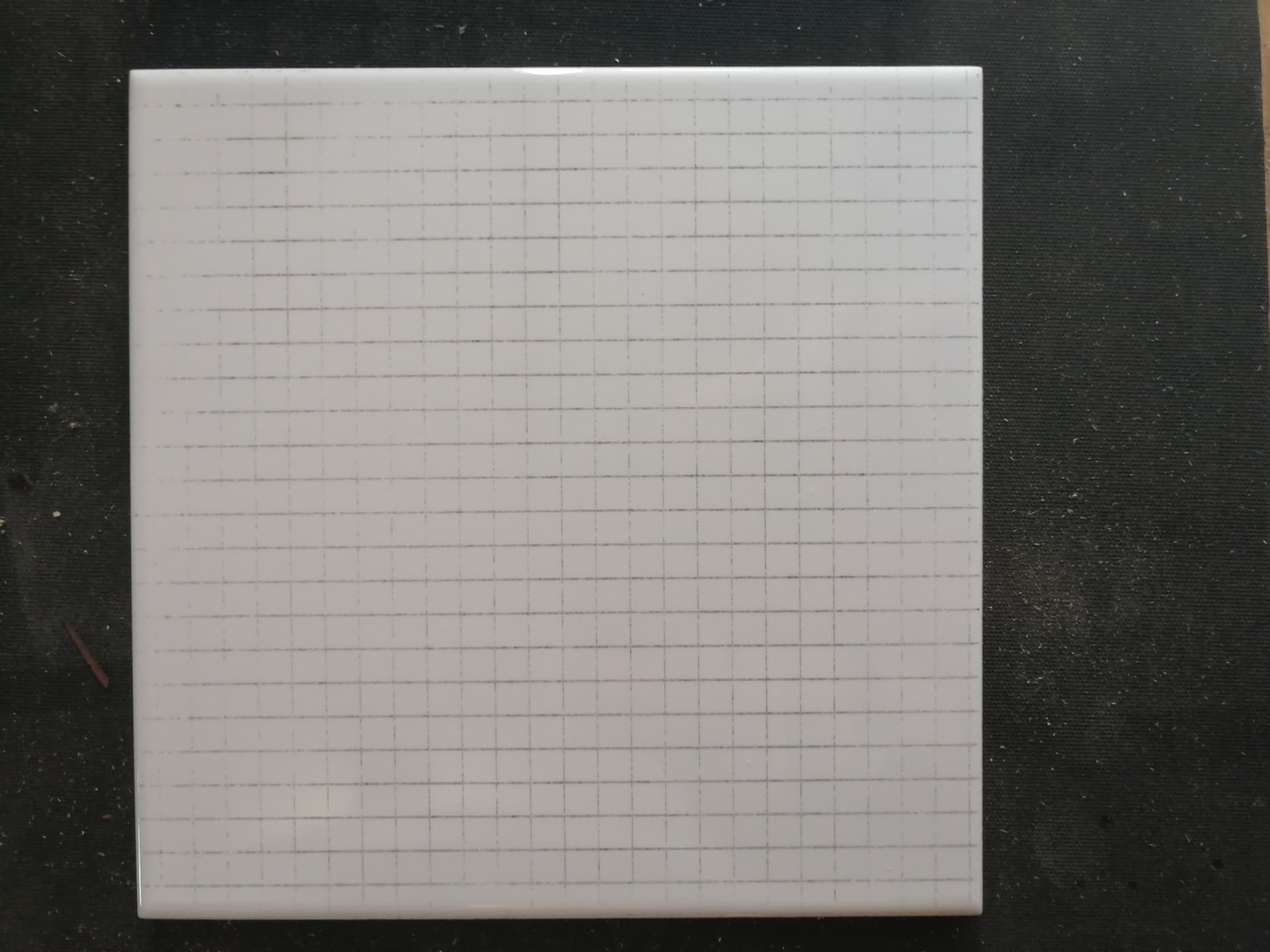
My painting is obviously not brilliant (it was the first test) but what you already can see is that the lines are bit blotchy… The next photo shows the same tile, but with the paint removed.
>
Next test was with diluted paint (Dulux Trade Matt on medium base - locally mixed, water soluble).
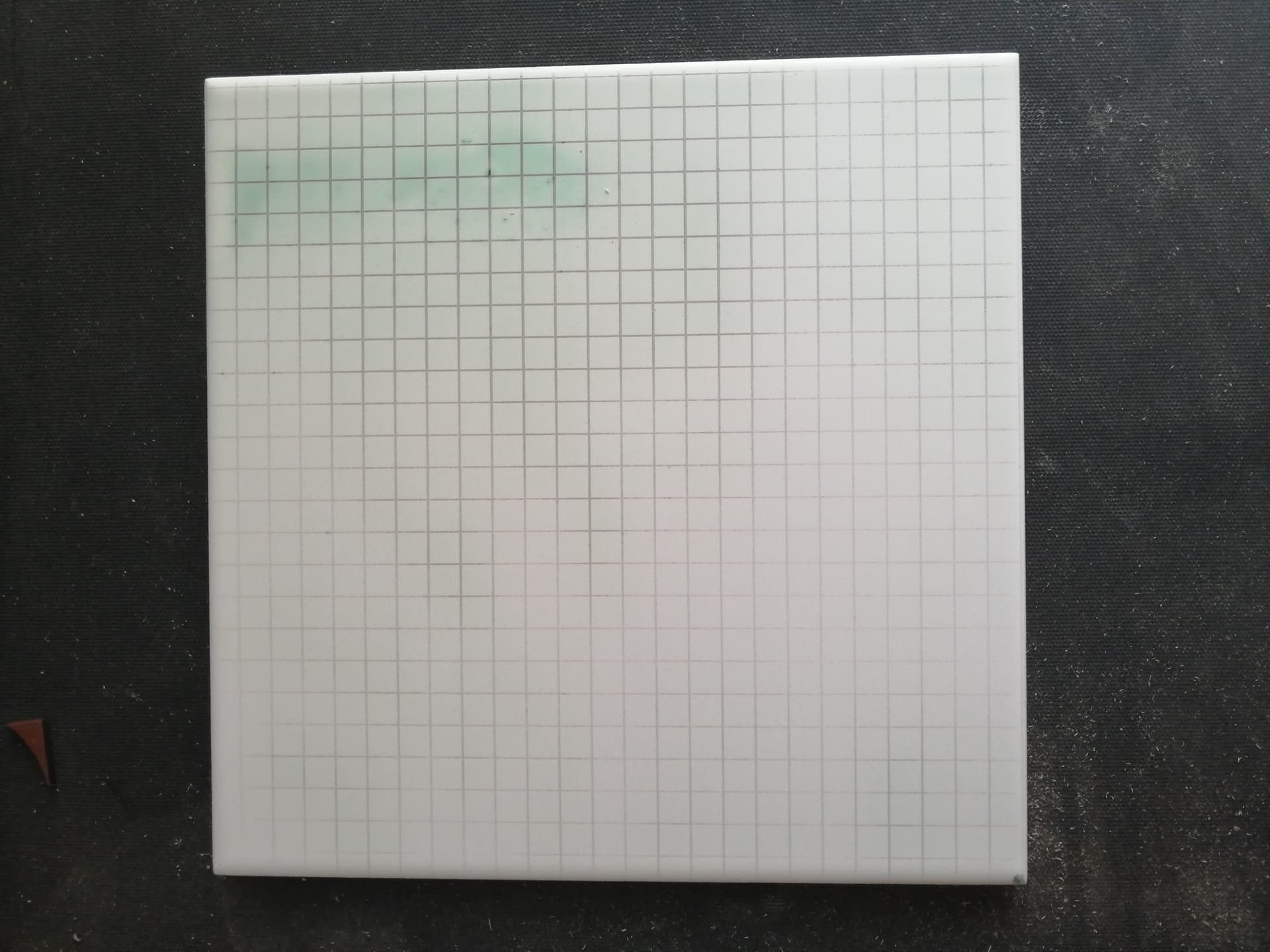
Al;so with green colouring, could be more even.
This is with the paint removed…
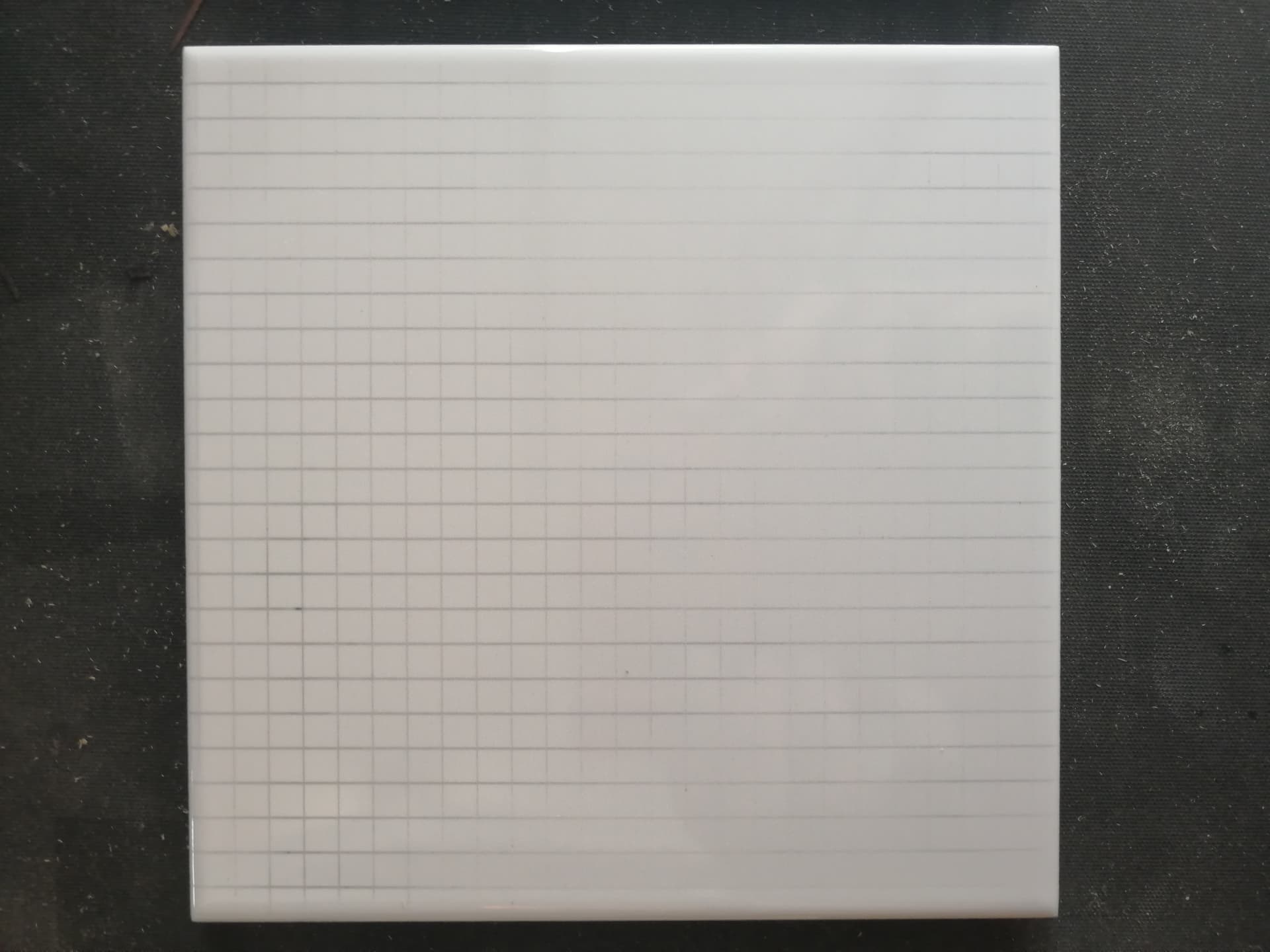
As this lines weI then wondered if the PVA would be giving the airbrush difficulty and creating the blotchiness (did I just made up that word?)
So I made a new mix, with water, bit of paint and a bit of titanium dioxide. i.e. the paint takes over the function of PVA use paint. Now it looked like this:
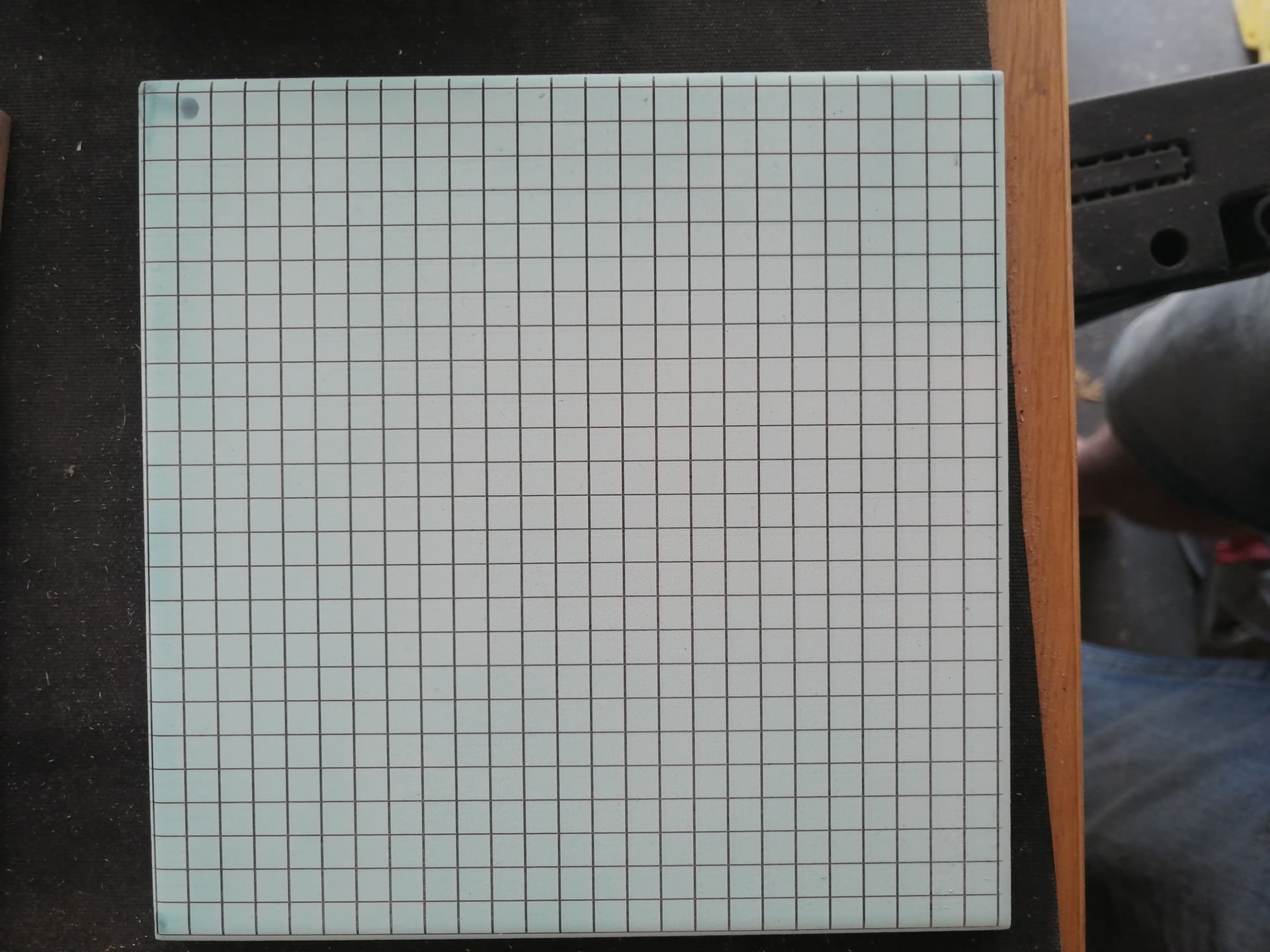
This made me happy!

With the same mixture, I continued to do a test for gray scales:
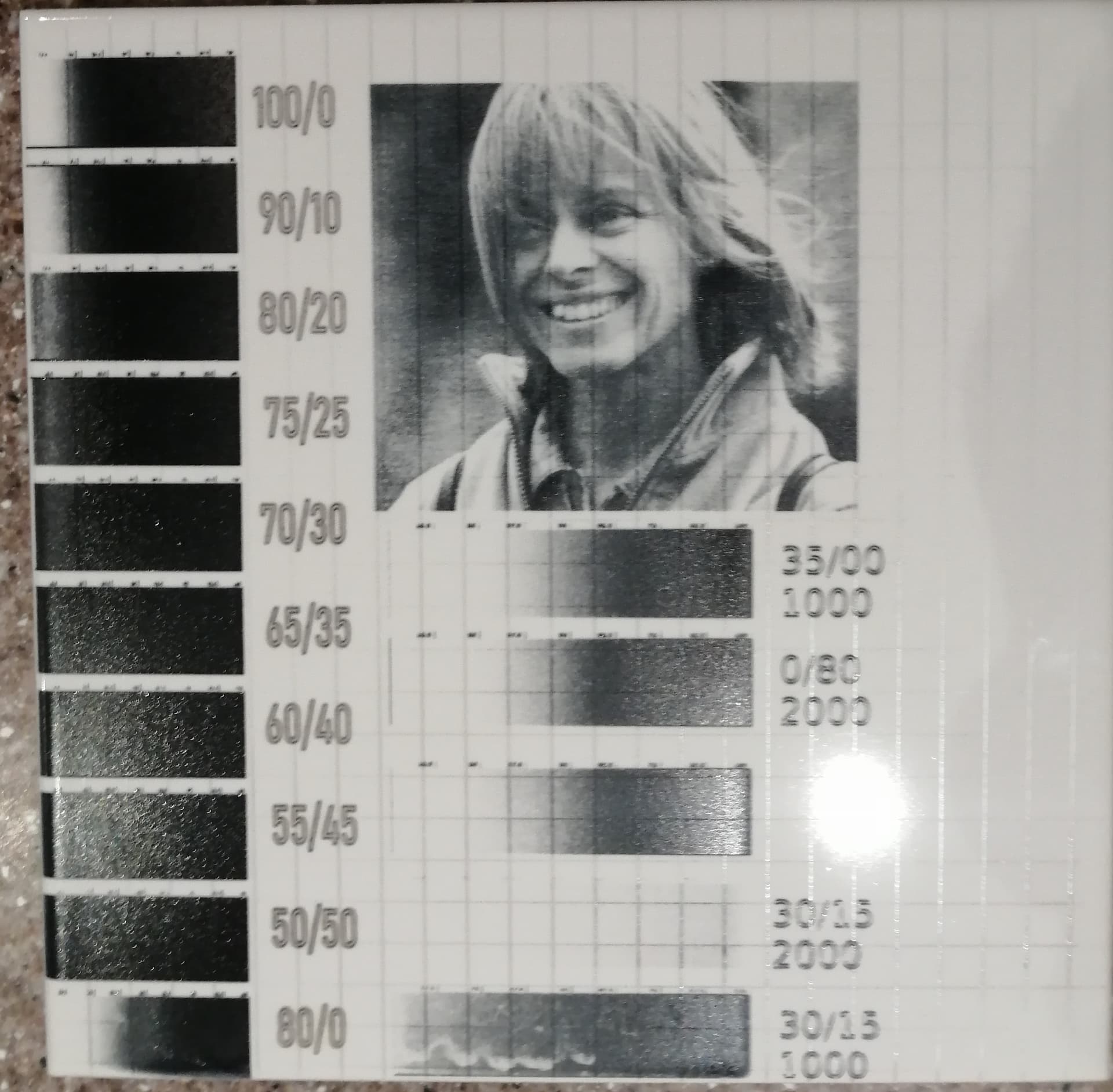
In the first column, which I ran at 1000mm/m I varied the max and min%. The square, I created in PowerPoint (other programmes are available) with a gradient fill from transparent to full black.
The first number is the max power, while the lower one is the min power. Although with the paint still on it, it showed slightly different, it gave me some values to work on. The second column I tried the lower power settings with 1000 mm/min (here I had a paint issue) and with 2000 per min (not much to show for) The idea is now to stretch the grey zone, so you get white only just on the left and black only just on the right. I need a bit more trialing, but I think the picture was already a big improvement. It was burned at 2000mm/m min 5% max 75%. There are no burned out areas, but lot of middle tone greys. Something you don’t see on the picture is that the blacks are really black. You don’t have the shiny glimmering which I had on the previous test.
So my conclusion is that for the airbrush, the PVA gives a irregular result.Was this my mixing or is it inherent to the product?
So the next step is to: get my own air brush, fixate the mixture and finalise the grey scale.
Did any one try to spray it on with a paint sprayer (like this https://www.screwfix.com/p/energer-enb769srg-700w-electric-spray-gun-240v/497KJ?kpid=497KJ&ds_rl=1243321&ds_rl=1241687&ds_rl=1245250&msclkid=f74bffa65f4218145a709cab7c13fb77&utm_source=bing&utm_medium=cpc&utm_campaign=MPX_UK_SHP_MAN_S_ALL_Decorating&utm_term=4584138878236871&utm_content=S%20-%20All%20Decorating&ds_rl=1245250&gclid=f74bffa65f4218145a709cab7c13fb77&gclsrc=3p.ds? It could be also an alternative to using a brush…
I hope this is interesting / helpful. At least it keeps the topic open a bit longer… 