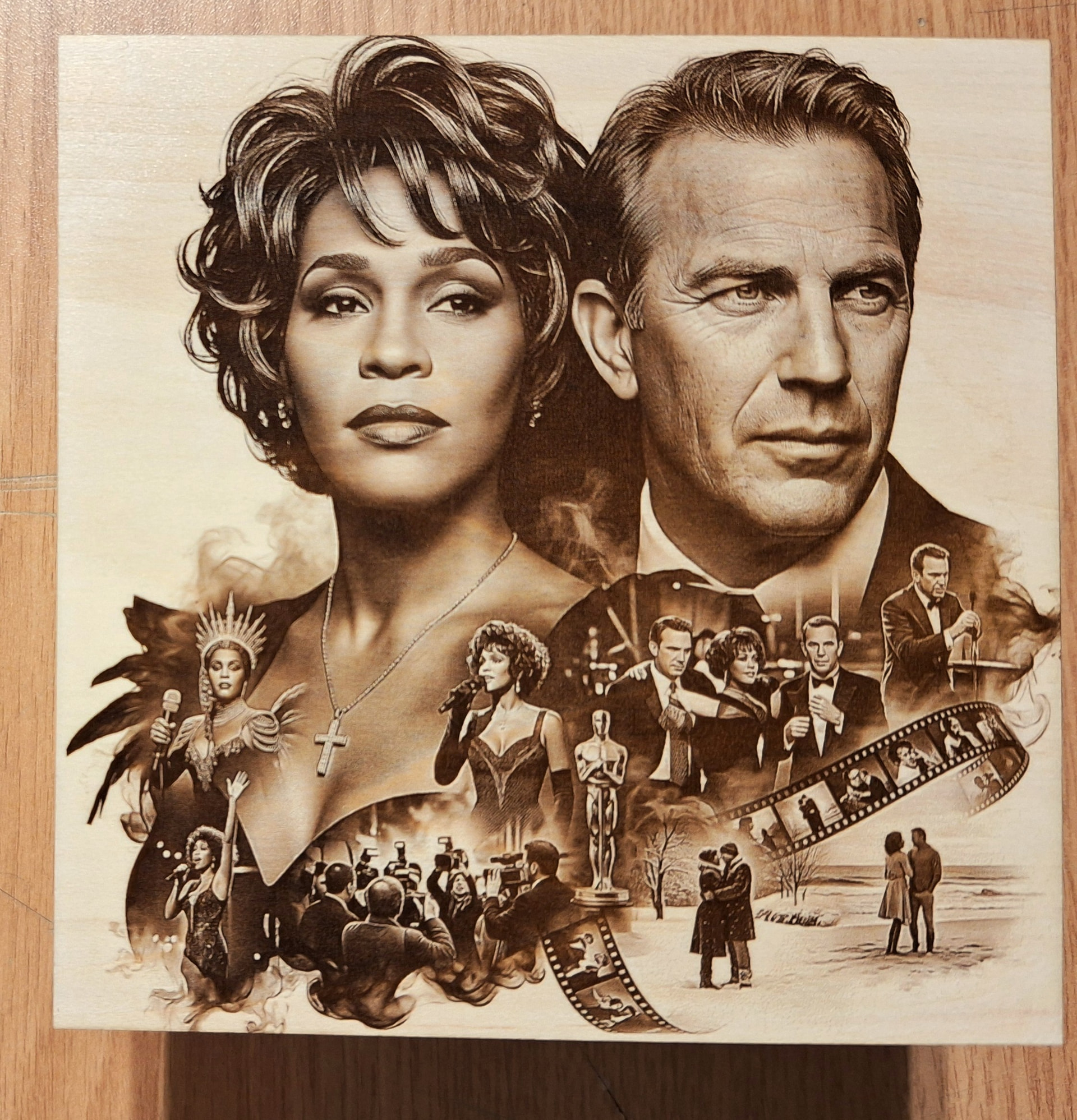
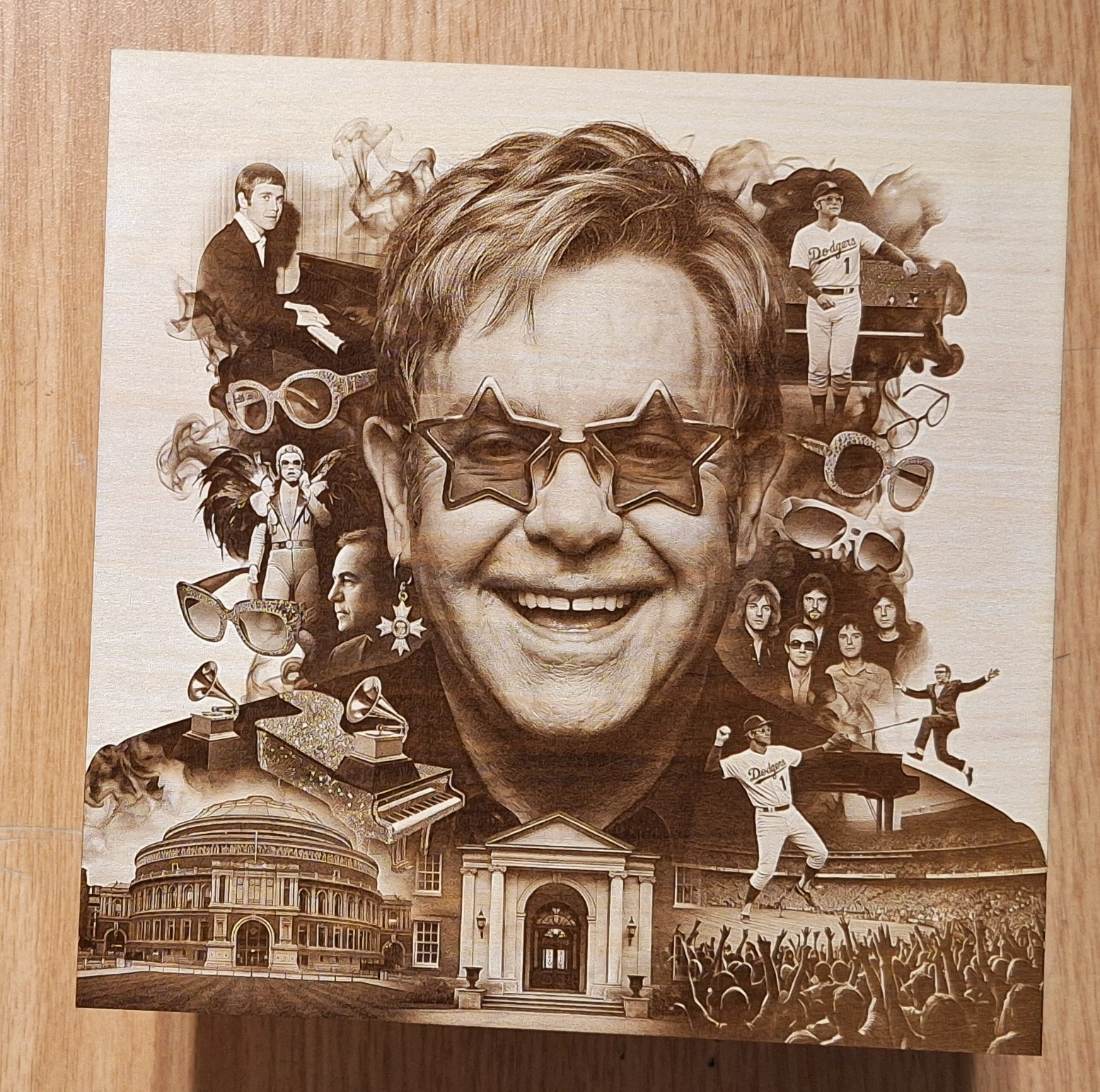
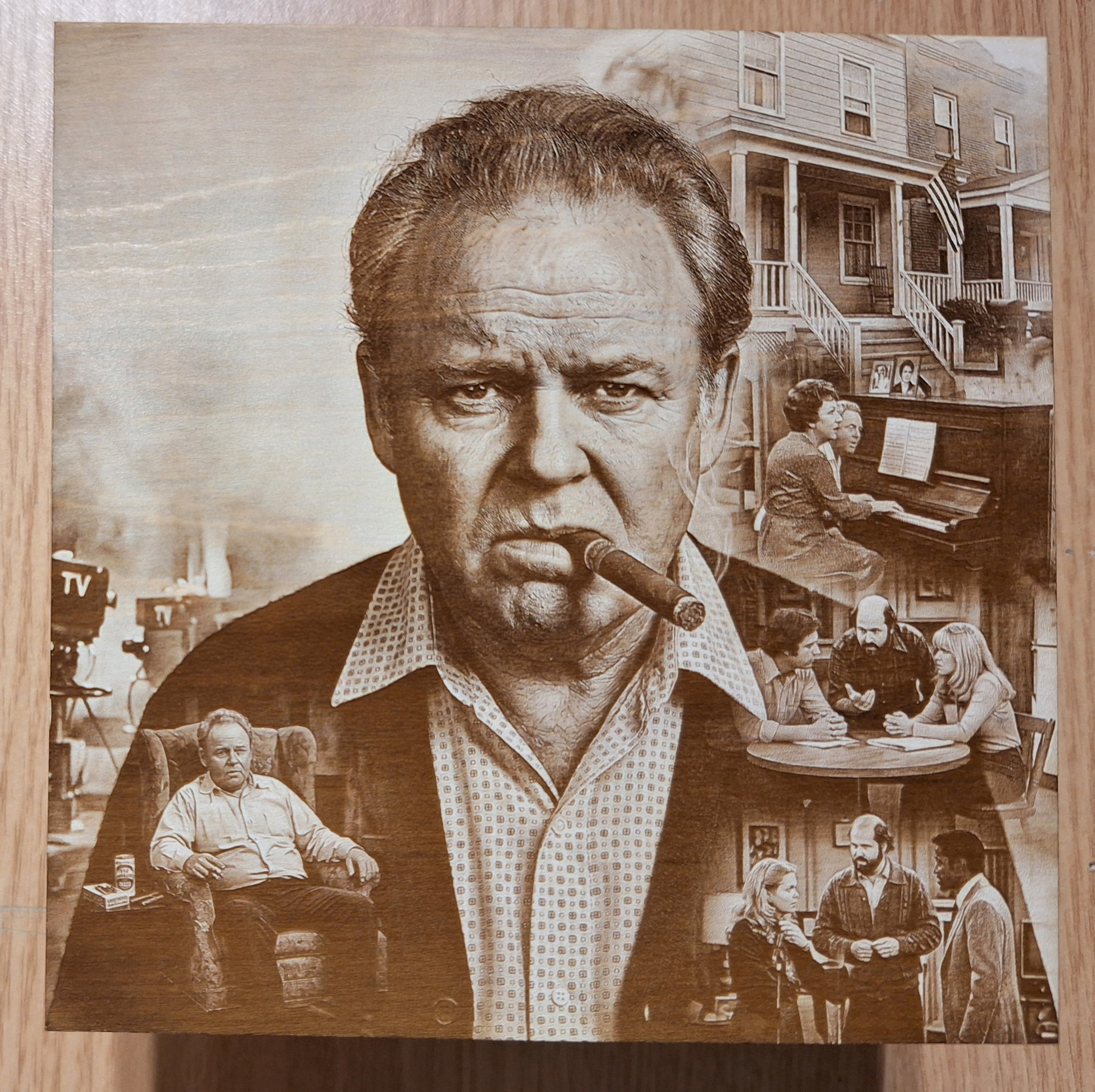
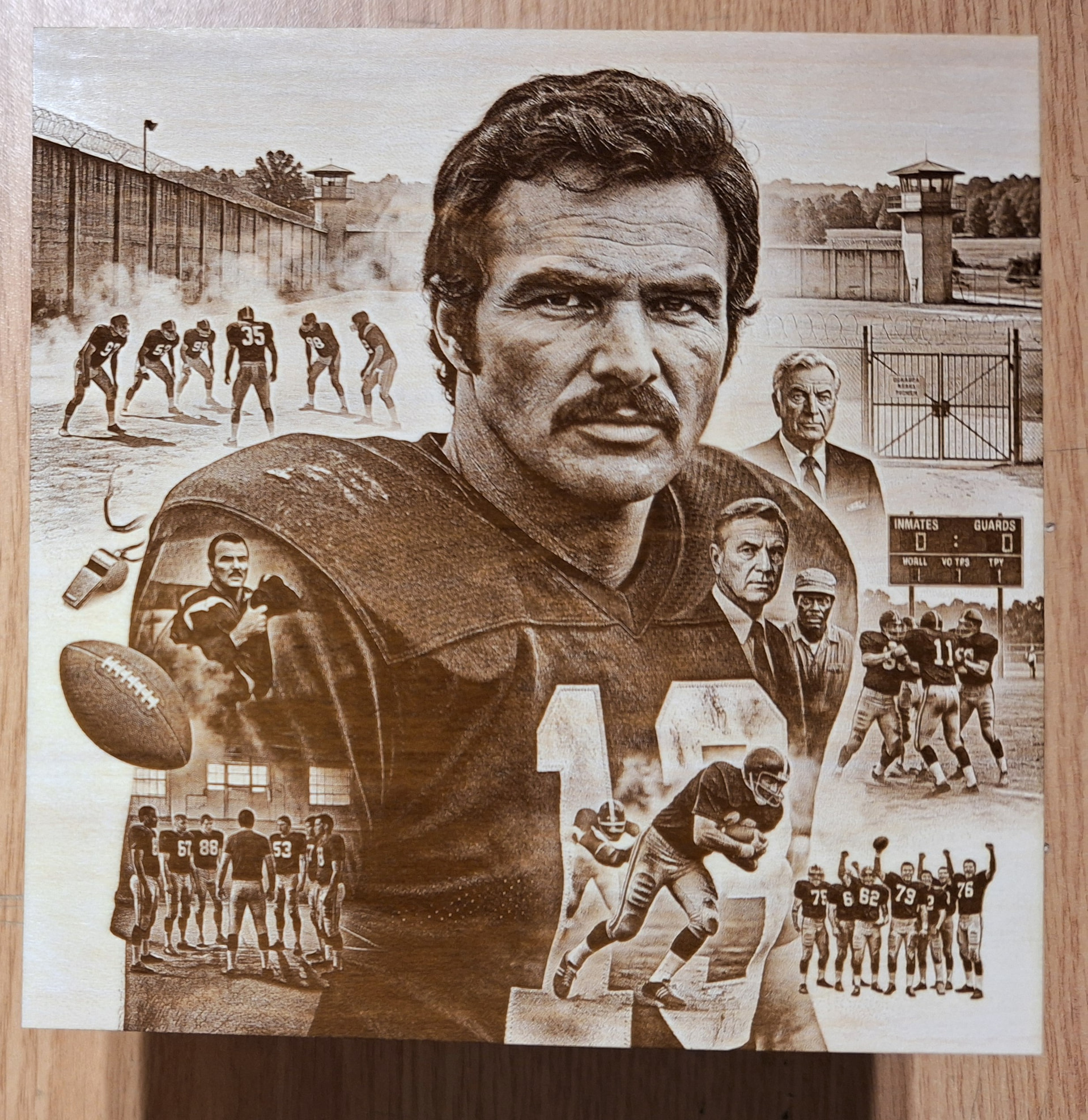
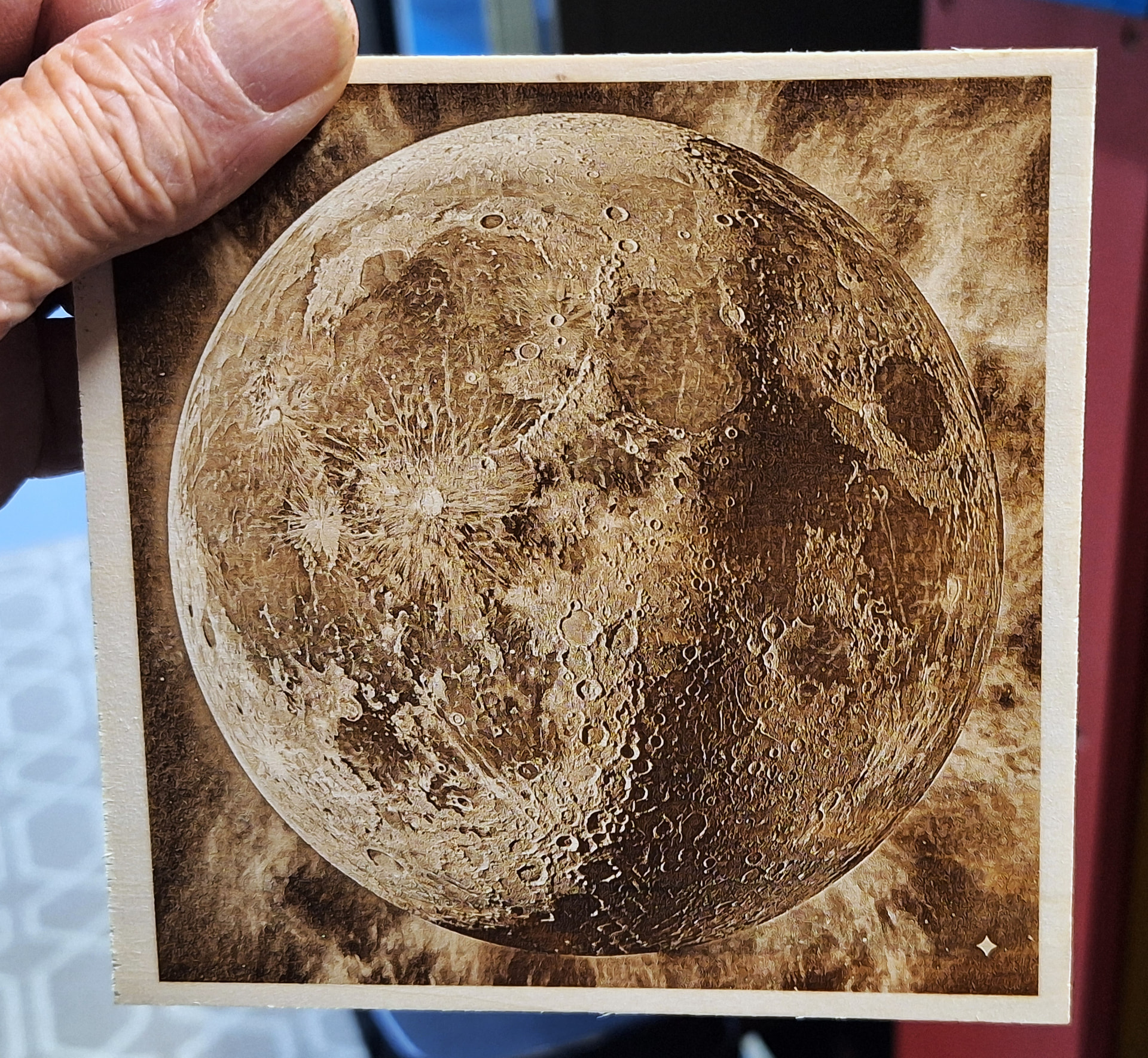
Dialling in basswood with 5 watt UV
f330 lens
LB stucki
90/80kHz/0.9 ns

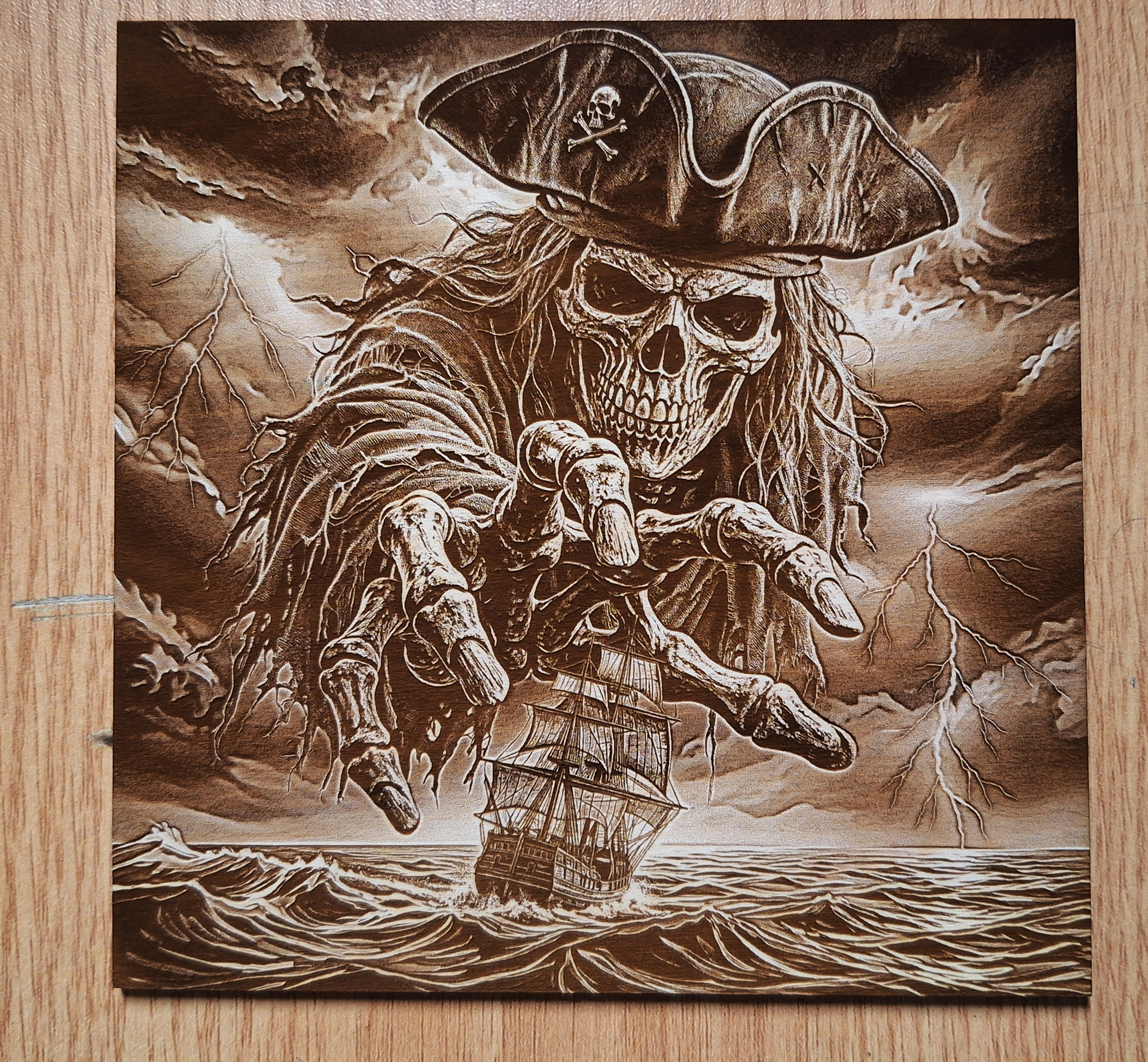
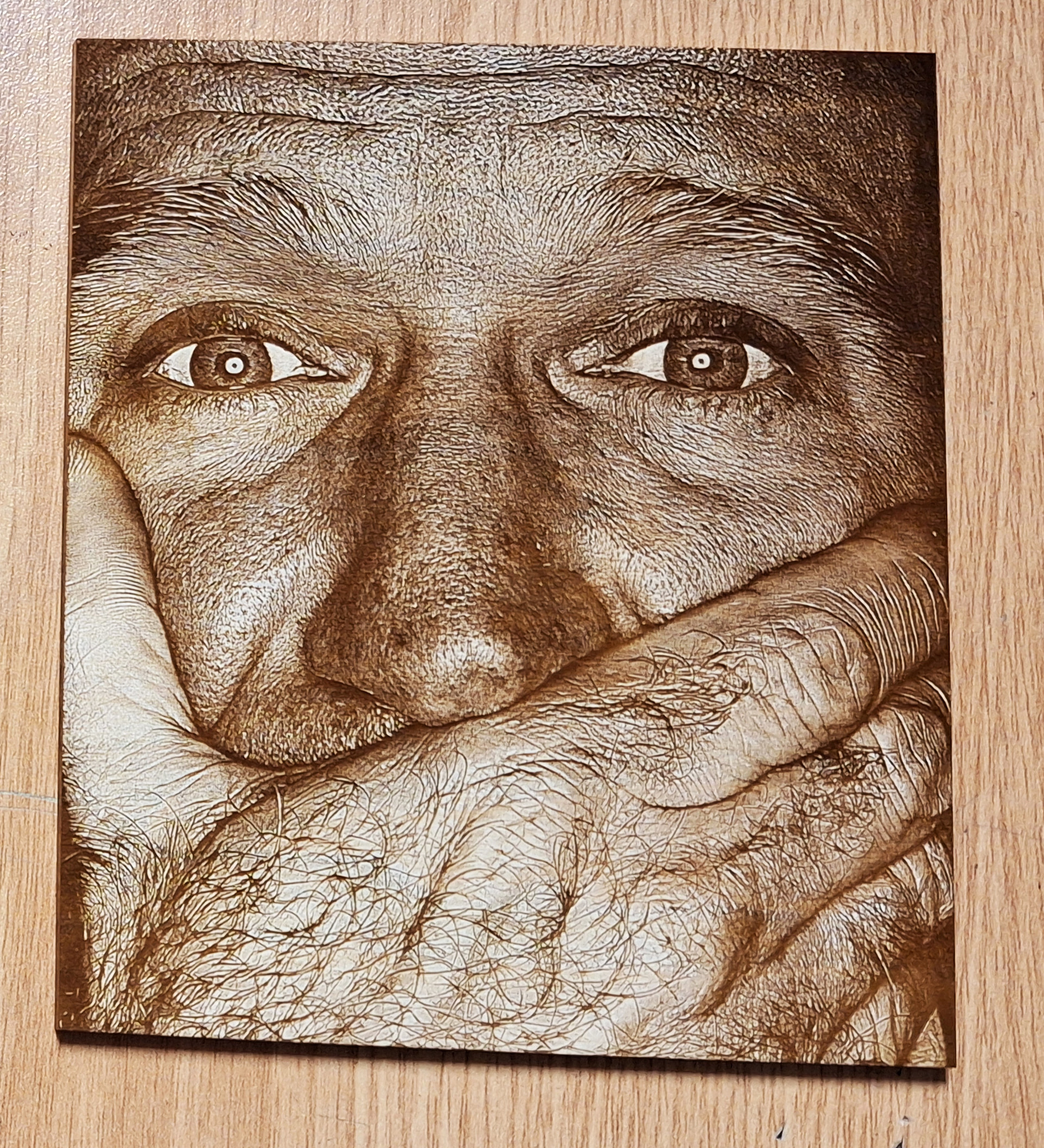
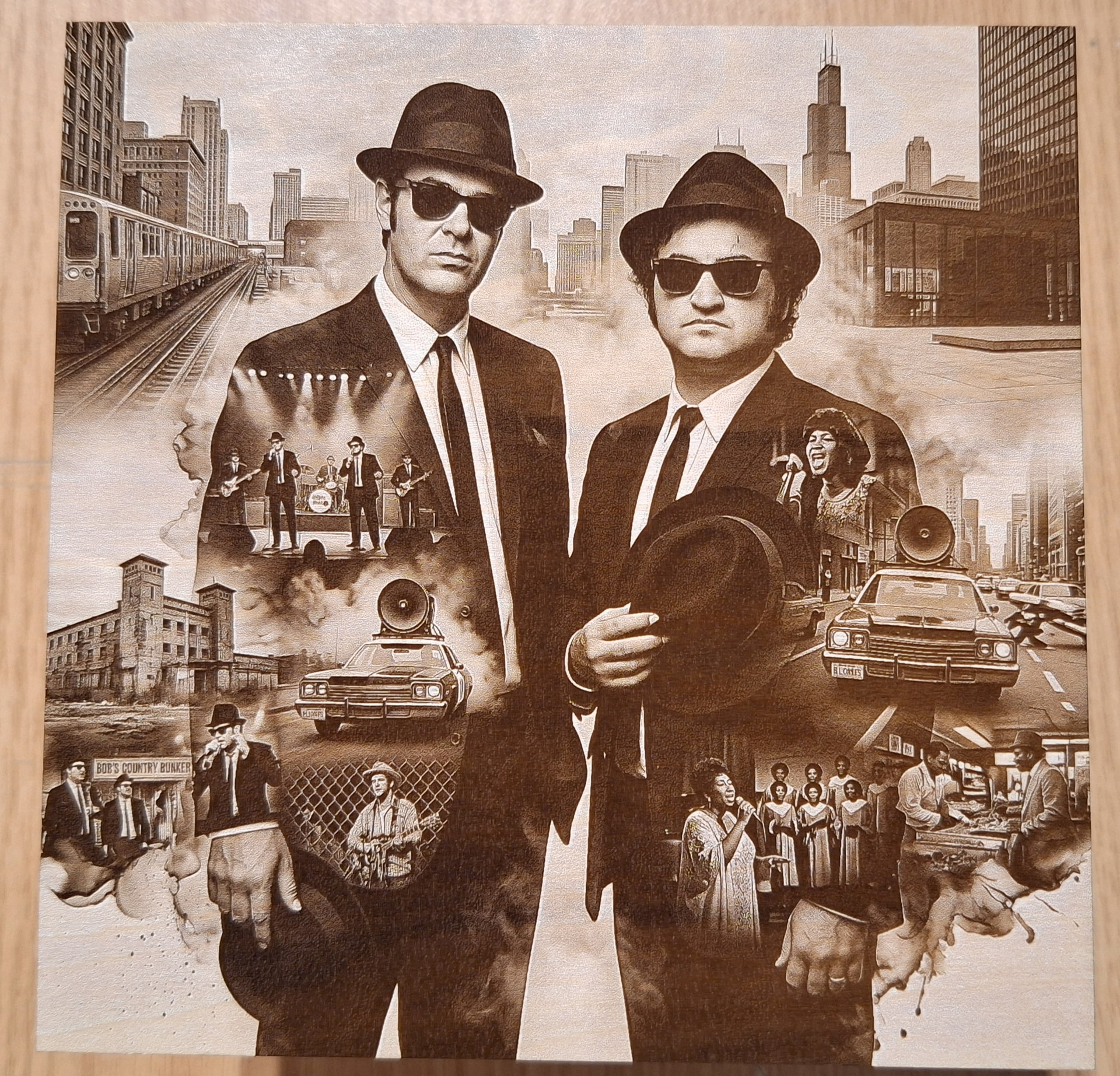
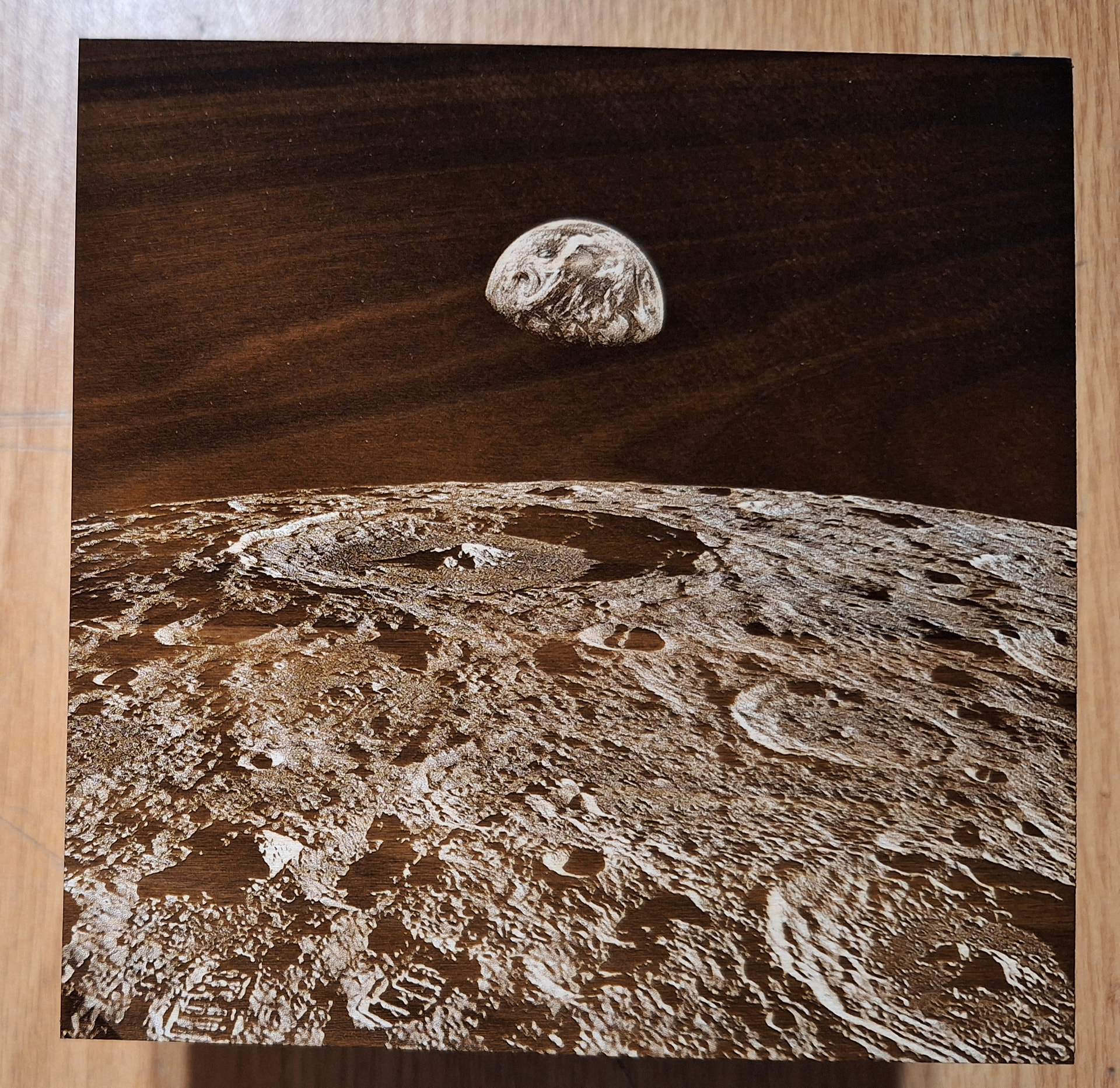
12 Likes
There you go, showing off again. 
Laser Envy here!
4 Likes
Here as well
Nicky, You are amazing. I am glad you are on our side. 
Ferg
1 Like
I definitely have to add a UV Galvo to my army of machines.
1 Like
Mine is a Hao-Tian from Pascal Liu
Fantastik service and support and a well built machine
For sure, Pascal has been pinging my DM’s. He’s very proactive.
If he doesn’t watch out I’m gonna turn around and grab a machine soon, LOL
1 Like
Maybee if you Mention you Know Nicky Norton you may get bit of discount
3 Likes
He should get it free, as a donation to the Lightburn Research Lab.
2 Likes
awesome work
1 Like
How do you get around the grain pattern in the wood.
It always disrupts my images
This is all grayscale no dithering.
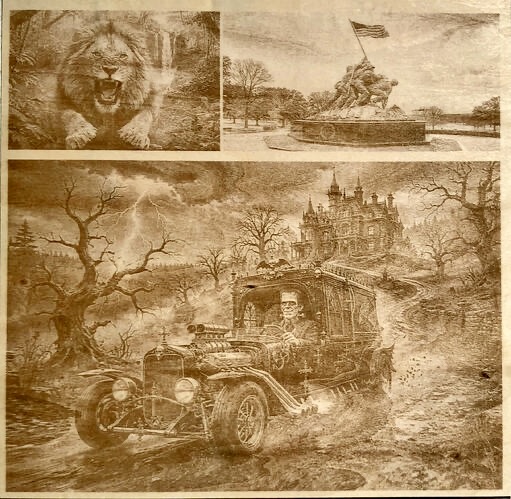
If you look at Elton John, you can see the grain in the middle of the image.
The only solution I know is to buy wood that had no grain.
Woods like basswood, ebony, popular, and sugar pine have almost no visible grain or extremely fine, tight textures that appear smooth and uniform.
I have noticed quite a difference between Basswood and Baltic Birch.
1 Like
And always run the burn direction against the grain. NOT WITH IT.
3 Likes
Nicky,
These are fantastic! Great work!
I can tell how big the one with your thumb in the photo is. Are the others the same size?
What resolution are you using? It looks like the resolution rivals the 508 DPI I use for my titanium work.
Thank you for sharing!
1 Like
Thank you
5 x 5 inch LB stucki 380 DPI
TiO2 work
So that would be Norton White Tile method
Well, with photochemical ablation in mind and tiny dots, the whole approach to a quality diode/Co2 lasered image on ply will be quite different.
1 Like
Nicky,
I didn’t know what “Norton White Tile method” is, so I asked Gemini AI. It came up with a detailed description and named you explicitly as the inventor of the method. That’s super cool! I love how practical and low-cost your method is and that it produces such a robust result. You did the world a great service sharing your technique with the rest of us. Thank you! I’m deep in the metal work right now, but your technique is now on my list of things to try. 
The detail you have achieved with 308 DPI on wood is amazing. What resolution do you typically use on the tiles?
My use of titanium is very different from your tile method. I’m alternately anodizing, ablating, anodizing titanium metal sheets to render full-color dithered mosaic images. Here’s a link to an LB post about it, and here’s a link to my GitHub site describing the process. I see you have a MOPA laser. I’m considering buying one to see if I can directly oxidize the colored dots for my mosaics, but also so I can try diffraction gratings and see how they look when anodized.
1 Like
Thank you
You have an amazing process !!!
I had to read a few times as my ol 75 brain is not as sharp as in my yoot
so its kinda like electroplating
Break image into parts of interest
engrave one part
Electroplate
engrave another part
Electroplate etc
Crucial to re-align work piece each time
Nicky,
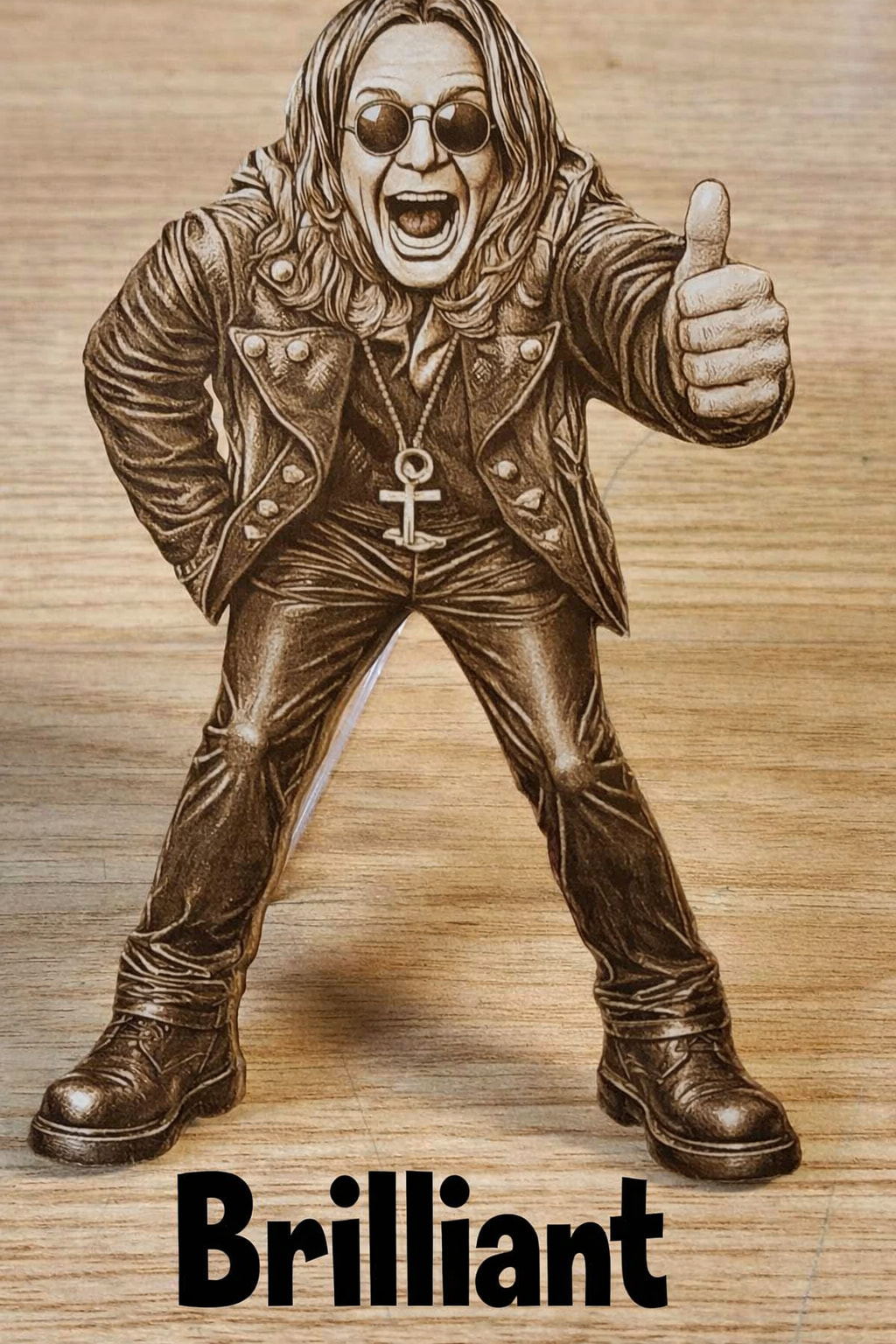
Thank you for your kind feedback! I really appreciate you taking the time to read and understand my process; I’m having a lot of fun with this, and your words of encouragement and very cool (and incredible) thumbs up image mean a lot coming from someone who is clearly a master of this craft!
Yes, repeatable registration is one of the myriad variables I had to figure out how to control carefully. The process is a little more forgiving than it might seem at first because the separator script is generous about over-provisioning the earlier colors so slight mis-registration can still let them show though gaps in the later colors. The extreme case of this is the fact that the first color is solid across the entire sheet.
I’m very curious whether a MOPA laser can simply apply each color dot directly where it belongs without ever taking the metal out of the laser. That would eliminate the need for repeatable registration, would make the process much less labor-intensive, and would enable people to do the mosaic dithering without needing to do anodizing. I don’t know how the resulting images would compare to the anodized ones. Have you done heat oxidizing on steel and/or titanium?